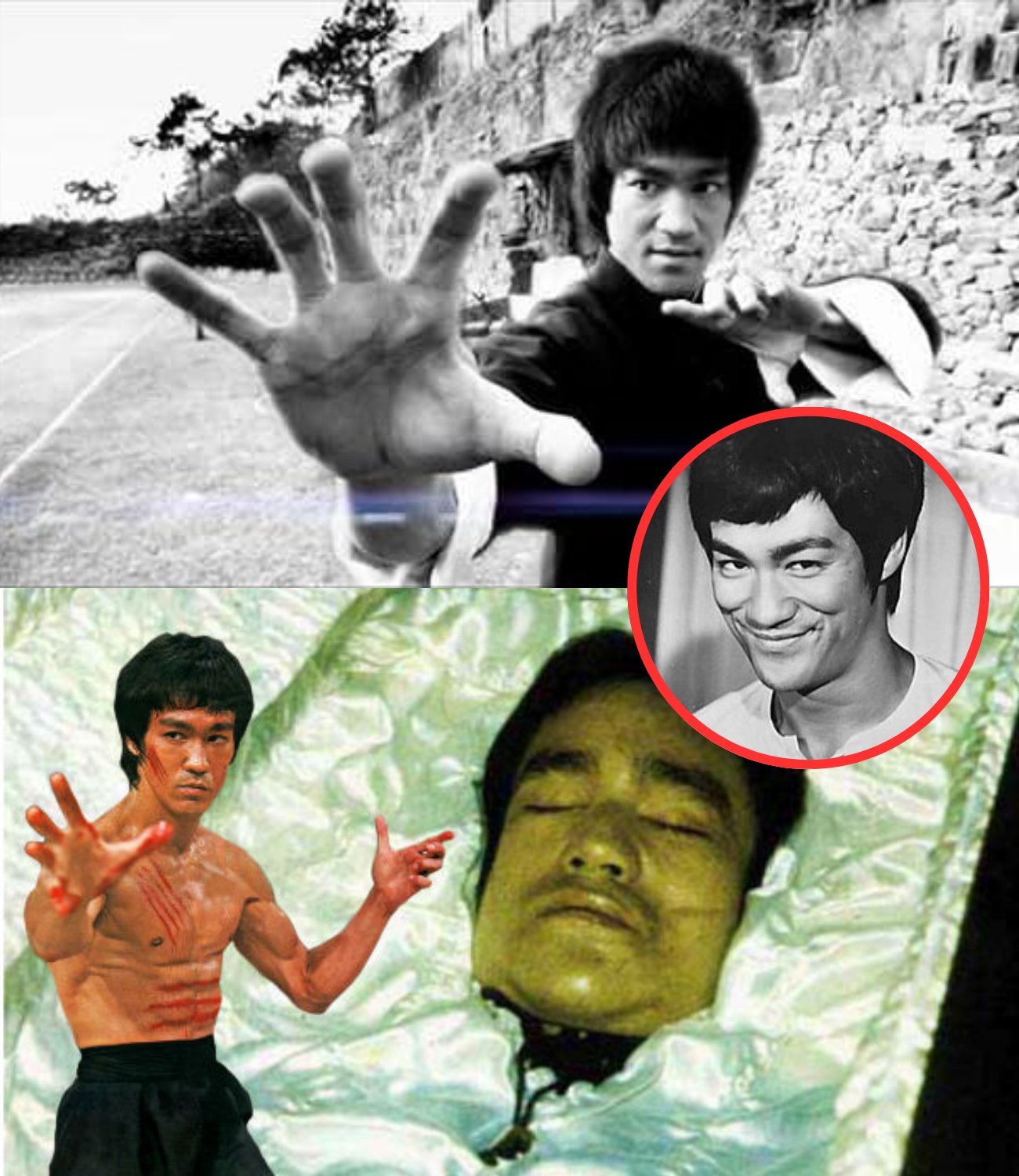
The world lost a blazing star when Bruce Lee, known to millions as Lý Tiểu Long, left us at the tender age of 32. A martial arts master, a philosopher, a filmmaker, and an icon whose fire burned so fiercely it seemed impossible for it to ever dim. Yet, on that fateful day in 1973, the man who redefined what it meant to move, to fight, to live with purpose, slipped away, leaving behind a legacy that still ripples through time. For decades, the mystery of his death hung like a shadow over his brilliance. The world whispered theories—some said poison, others whispered of a curse, and many simply couldn’t fathom that such a force of nature could be extinguished. Until now. A group of scientists and martial arts devotees, driven by reverence and curiosity, have uncovered what they believe to be the truth behind Bruce Lee’s untimely end.

Imagine Bruce, a man who could strike with the speed of lightning, whose very presence commanded the room. His body was a temple, sculpted through relentless discipline, his mind a furnace of ideas that fused East and West. He wasn’t just a fighter; he was a poet of motion, a teacher who showed us that strength wasn’t just muscle—it was spirit. His films, like Enter the Dragon, weren’t just movies; they were revelations, showcasing a man who moved like water, fluid yet unstoppable. But even water can be stilled, and Bruce’s life ended far too soon, leaving us to wonder: how could someone so alive, so vibrant, be gone?

For years, the mystery gnawed at those who loved him. Official reports cited cerebral edema—swelling of the brain—but the why and how remained elusive. Was it a reaction to medication? A hidden illness? Or something more sinister, as the rumors loved to suggest? The lack of answers only deepened the legend, as if Bruce Lee himself had become a riddle wrapped in a dragon’s coil.
Then came the breakthrough. A team of scientists, alongside martial arts enthusiasts who’d spent years studying Bruce’s life, dug deeper than anyone before. They pored over medical records, analyzed his lifestyle, and even revisited the Hong Kong heat of that summer day in 1973. What they found wasn’t a conspiracy or a curse, but something hauntingly human: hyponatremia, a condition caused by dangerously low sodium levels in the blood. Bruce, they believe, had pushed his body to its limits—training relentlessly, eating sparingly, and sweating through the humid Hong Kong air. His discipline, the very thing that made him superhuman, may have tipped the balance. A perfect storm of dehydration, stress, and perhaps a medication that exacerbated the imbalance led to the swelling in his brain. It wasn’t betrayal or malice that took him; it was the cost of living at the edge of human potential.

This revelation doesn’t diminish Bruce Lee; it makes him more human, more real. He wasn’t a god, though he seemed like one. He was a man who poured every ounce of himself into his art, his philosophy, his dream of showing the world what was possible. His death, like his life, reminds us of the fragility beneath strength, the fleeting nature of even the brightest flames. Yet, his spirit endures—in every martial artist who strives for mastery, in every dreamer who dares to break boundaries. Bruce Lee’s story isn’t just about how he died; it’s about how he lived, and how his legacy continues to inspire us to be like water—adaptable, relentless, eternal.
It began with the sirens.
Long before the headlines, before the tweets and breaking news chyrons, there was just that high, wailing sound tearing through the late afternoon air. People on the street stopped mid-conversation, turning toward the noise without knowing why.
A terrible accident had just taken five lives.
And among the survivors—barely—was Selena Gomez.
Fifteen minutes later, the world knew. Her fans, scattered across continents and time zones, stared in disbelief at their screens as the first words appeared: “Selena Gomez involved in a fatal accident.”
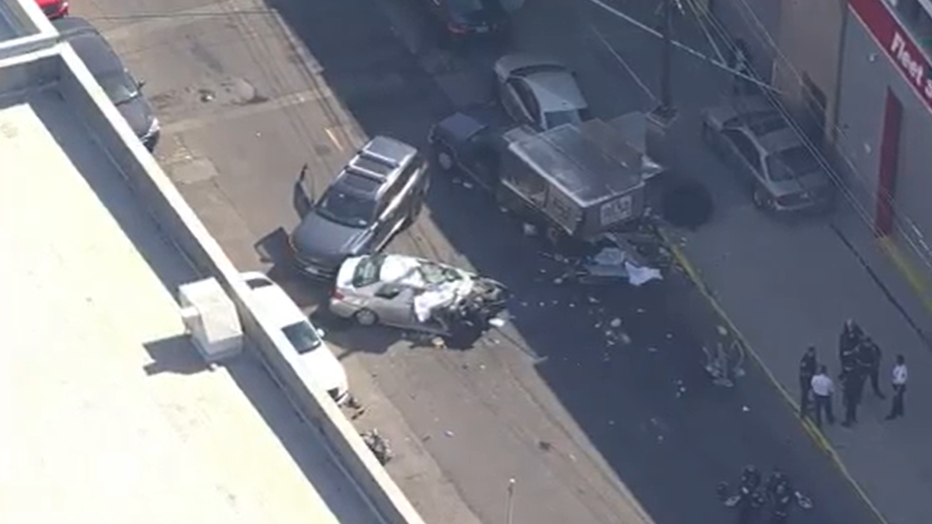
It was the kind of sentence that makes your stomach drop before you’ve even read the rest. But the details came in waves, each one crashing harder than the last. A multi-car collision on a rural stretch of highway. Five people gone. Others rushed to the hospital in critical condition. Selena was one of them.
Her family was the first to speak.
In a voice tight with grief and fear, a spokesperson read their short, trembling statement: “Selena is alive. She’s receiving urgent medical care. Please keep her in your thoughts.”
That was all they could say, and yet it was enough to ignite a tidal wave of emotion.
Fans flooded social media, posting photos and lyrics, clips of her laughing in interviews, snippets of songs that had carried them through hard nights. “Stay strong, Selena,” they wrote. “You’ve got this.” Some sent prayers. Others lit candles in their homes.
The accident itself sounded like something from a nightmare. Eyewitnesses described a sudden screech of brakes, the violent crunch of metal folding into metal, and the sickening silence afterward, broken only by the hiss of smoke. First responders worked frantically under a fading sky, pulling survivors from the wreckage, their faces set in grim determination.
Selena, they said, had been conscious for a moment—long enough to speak to the paramedics. “Please,” she whispered, “help the others first.” That was the kind of thing her friends would later say didn’t surprise them.
Now, she lay in a private hospital room, her condition serious but stable. Tubes and monitors surrounded her, each machine a quiet promise that she was still here. Her mother sat at her bedside, holding her hand as if sheer willpower could keep her tethered to the world.
Outside the hospital, fans gathered, leaving flowers, letters, and hand-drawn posters on the front steps. Someone brought a small speaker and played her music softly—songs drifting into the warm night air, each note a kind of vigil.
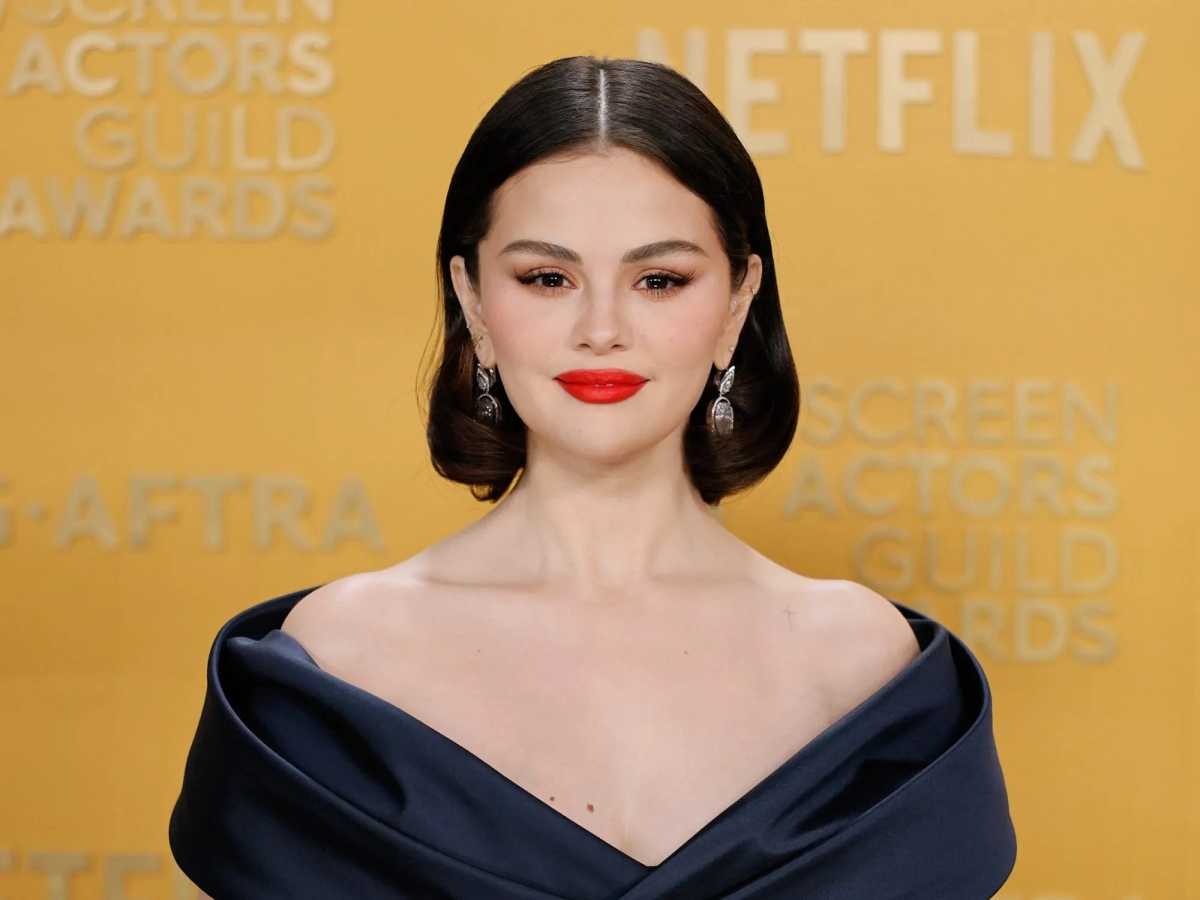
The accident had taken so much in an instant. Five lives gone. Families shattered. But somehow, amid that loss, there was still a fragile thread of hope.
Hope that Selena would open her eyes soon.
Hope that the girl who had given so much of herself to the world would be given the time to heal.
Her family’s final words in their statement were simple: “She’s a fighter.” And maybe that’s what everyone needed to hear—not just that she was alive, but that she was fighting.
For now, there are no promises. No one can say how long recovery will take, or what scars will remain. But tonight, in bedrooms and kitchens and sidewalks far from that stretch of highway, millions of people are thinking the same thing: