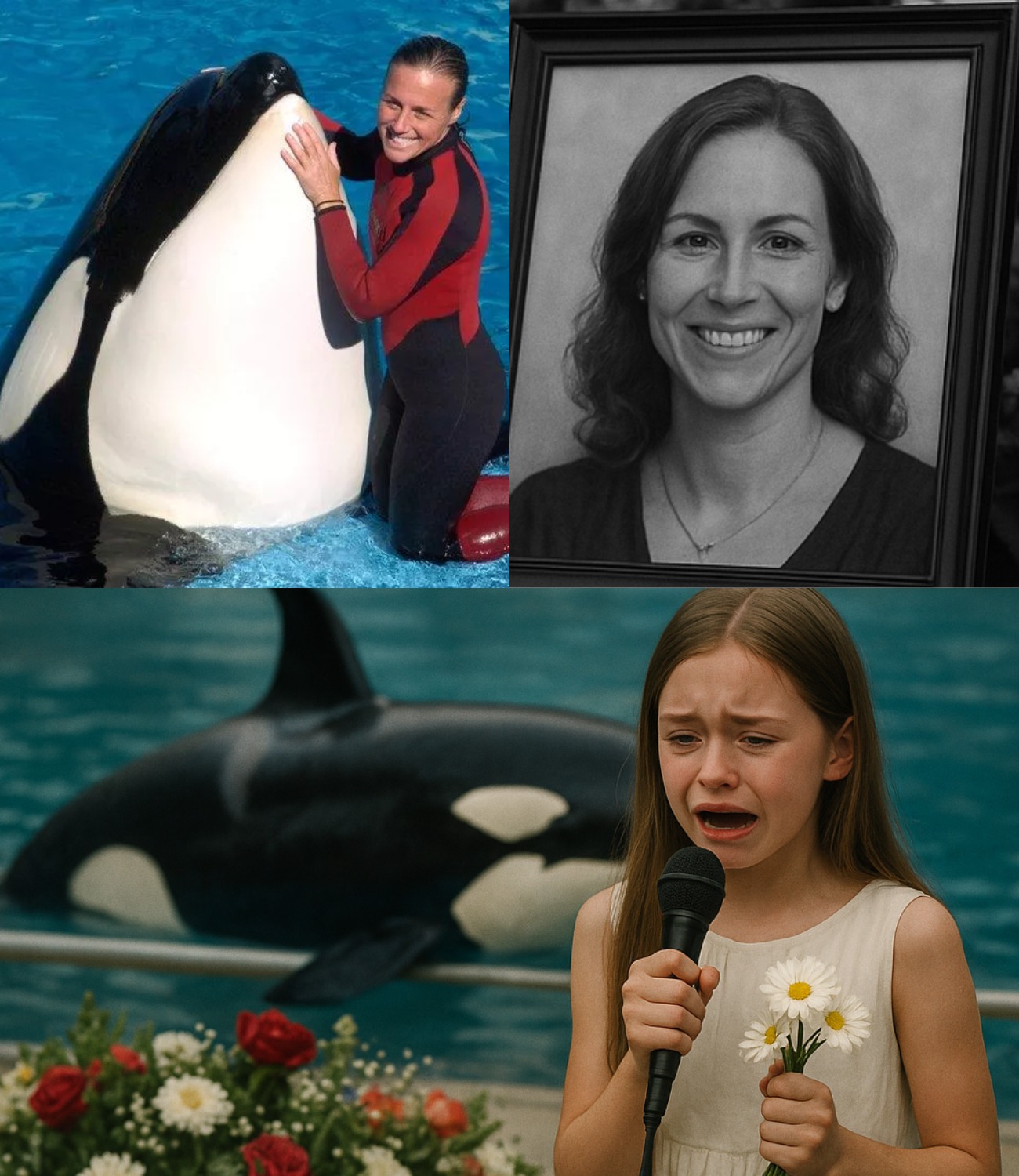
A Tribute Turned Tragedy
The arena was a sea of held breaths, every eye fixed on Jessica Radcliffe. She stood alone on the stage, a young woman carrying the weight of her mother’s legacy, a whale trainer whose life had been a dance with the ocean’s giants. Jessica’s voice, soft but steady, wove a tribute that broke the crowd’s heart, each word a thread tying them to her mother’s memory. Tears fell freely as she spoke of a woman who’d lived for the whales, who’d taught them to soar through water like poetry in motion. But in a heartbeat, that fragile moment shattered. A grieving whale, its heart heavy with loss, unleashed a shocking outburst, hurling Jessica across the stage. Thousands gasped, frozen in disbelief, as the farewell turned to chaos.
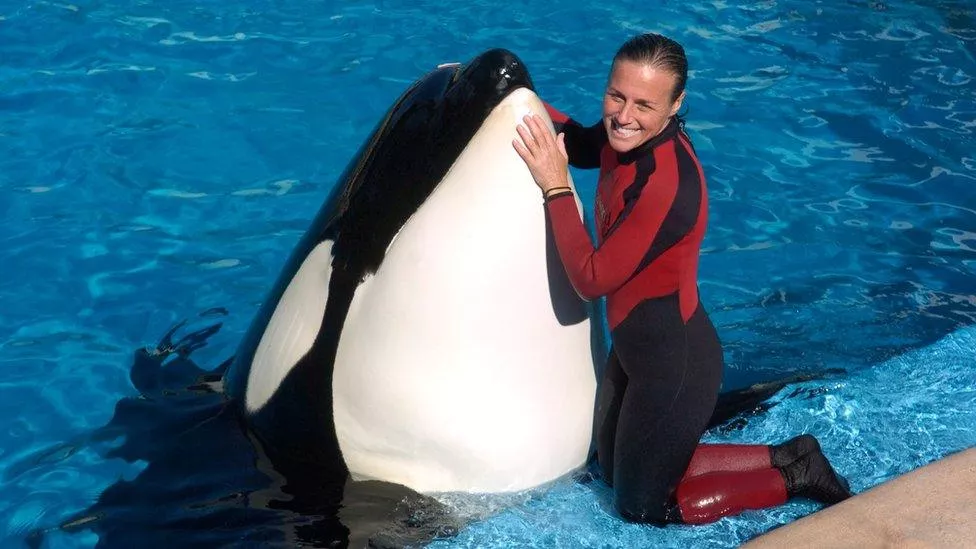
Jessica’s mother, a legend in the world of marine training, wasn’t just a professional; she was a soul who spoke the language of the sea. Her days were spent in shimmering pools, guiding orcas through routines that felt like magic. Her laughter echoed with their splashes, her bond with them deeper than words. When she passed, too soon, too suddenly, the world felt dimmer, as if the ocean itself mourned. Jessica, her daughter, barely out of her youth, stepped into that spotlight to honor her—a brave, trembling act of love. She spoke of her mother’s nights by the tanks, whispering to the whales, believing they understood her dreams.
The crowd was spellbound, hanging on Jessica’s every word. They saw her mother in her eyes—the same fire, the same quiet strength. Hands clutched programs, strangers shared tissues, all feeling the weight of a life so fiercely lived. On X, clips of Jessica’s tribute spread like ripples, fans posting about her mother’s legacy, her iconic orca shows, the way she made the ocean feel alive. “She was their heart,” one post read, paired with a faded photo of her mother laughing beside a whale’s sleek form. The moment was a sacred goodbye, a shared ache for a woman who’d changed lives.
Then came the unthinkable. The whale, one of her mother’s closest companions, seemed to break under its grief. Maybe it felt her absence, maybe it sensed the void in the water where she used to stand. Its cry was raw, a surge of sorrow that erupted in a sudden, powerful thrust. Jessica, mid-tribute, was thrown across the stage, her body tumbling like a leaf in a storm. The crowd’s gasps drowned out the water’s crash, a collective shock that held the arena still. Crew members rushed to her, their faces pale, as Jessica, shaken but breathing, was carried away. The whale’s outburst wasn’t anger—it was a wail, a mourning too vast for its tank.
This wasn’t just a moment; it was a collision of love and loss. The whale, grieving in its own wild way, had spoken. It wasn’t violence, but a heart crying out for the woman who’d been its friend. Jessica’s tribute, meant to heal, became a wound that cut deeper. On X, fans shared their shock—some called it a tragedy, others a haunting echo of her mother’s bond with the orcas. “They loved her too,” one post read, with a video of the whale circling its tank, restless, lost.
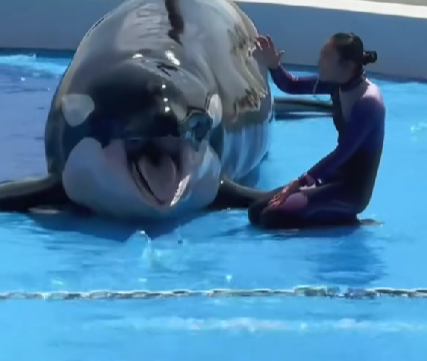
Jessica’s courage lingers, even now. She stood in her mother’s shadow to honor her light, and despite the fall, her love for her mother and the whales remains unbroken. Her mother’s legacy—their shared love for these creatures—lives on, even in this pain. The whale’s cry, Jessica’s fall, the crowd’s tears—they’re part of a story too big for words. We’re left with an ache, but also with the beauty of a life that touched both human and sea. Jessica, your mother’s song lives on in you.