WASHINGTON, D.C.**
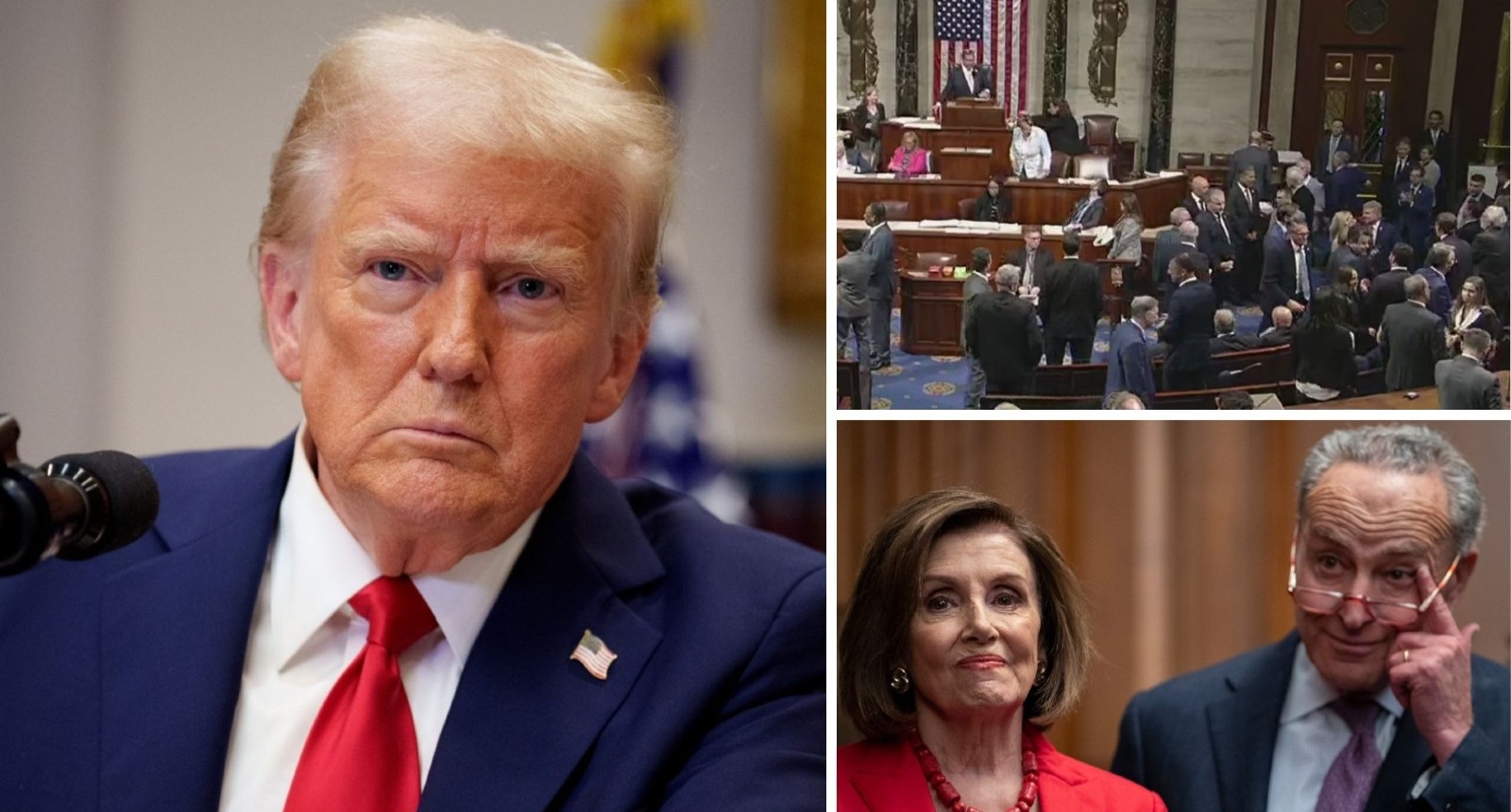
— In a historic congressional victory for the America First foreign policy agenda, Senate Republicans have officially dismantled a aggressive, Democratic-backed legislative gambit aimed at forcing President Donald Trump to secure explicit congressional permission before executing military or tactical operations against Cuba.
The razor-thin 51-47 procedural vote effectively kills the restrictive war powers measure, leaving the executive branch with completely uninhibited strategic leverage to address what Trump describes as a hostile regime currently sitting in a total economic and political “free fall.”
### I. Legislative Defensive Line: The War Powers Counter-Attack
The defeated resolution, aggressively championed by Senator Tim Kaine (D-VA), sought to invoke strict provisions under the War Powers Act.
Left-wing lawmakers desperately argued that the administration’s relentless economic siege—including sweeping maritime enforcement actions targeting Venezuelan fuel shipments and an unyielding naval blockade— already equated to active, un-declared military hostilities that have crippled the island’s energy infrastructure and triggered an unprecedented humanitarian emergency.
However, the Republican majority stood entirely firm, arguing that the Democratic maneuver was an out-of-order, hyper-partisan attempt to micromanage national security. Leading the charge, Senator Rick Scott (R-FL) argued with absolute authority that a War Powers Act intervention was completely illegitimate because no American ground boots have been deployed to the island.
The high-stakes tally largely mirrored party lines, though it was defined by monumental partisan defections. Independent-minded Senator John Fetterman (D-PA) broke ranks with his party to vote alongside Republicans to terminate the measure, while moderate Republican Senators Susan Collins and Rand Paul crossed the aisle to side with Democrats.
### II. ‘A New Dawn’ — Trump Prepares the Next Phase
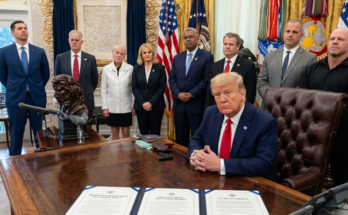
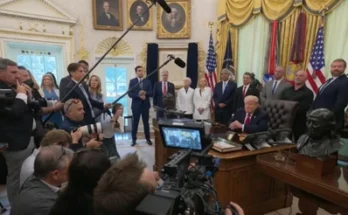
The victory on Capitol Hill directly aligns with a dramatic escalation of rhetoric originating directly from the Oval Office. Fresh off decisive, high-profile military and legal achievements targeting hostile networks in Iran and Venezuela, President Trump has made it clear that the focus of American power has permanently pivoted toward the Caribbean.
Addressing thousands of highly energized conservative activists at a Turning Point USA rally in Phoenix, Arizona, Trump boldly forecasted a massive, imminent geopolitical realignment just 90 miles off the coast of Florida.
“And very soon, this great strength will also bring about a day 70 years in waiting,” Trump declared to a roaring crowd. “It’s called A New Dawn for Cuba. We’re going to help them out with Cuba.”
### III. Redressing Decades of Brutality
Trump explicitly framed his unfolding Cuba strategy around justice for the millions of victims of the communist regime, directly connecting his actions to the deeply influential Cuban American exile community anchoring South Florida.
“We have a lot of great Cuban Americans,” Trump stated with intense conviction. “You go to Miami, we have people, Cuban Americans, people that were brutally treated, whose families were killed, brutalized—and now watch.”
With the Senate successfully removing all domestic legislative barriers and Secretary of State Marco Rubio maintaining an uncompromising line on regime change, international intelligence analysts agree that the administrative groundwork for an unprecedented intervention is complete. By successfully pairing a crushing energy embargo with an unyielding mandate from the U.S. Senate, the Trump administration has signaled that the decades-long status quo in Havana is officially over.