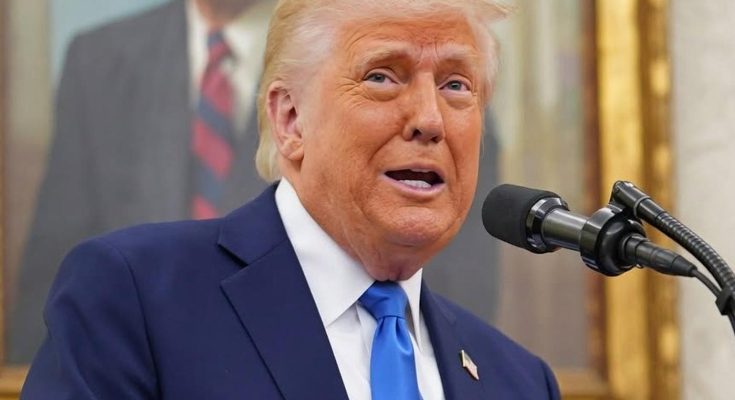
Tensions Rise After Trump’s Remarks About the Press, Prompting New Debate Over Press Freedom WASHINGTON – A packed room of reporters fell noticeably quieter as President Donald Trump delivered remarks that immediately drew intense scrutiny from journalists, legal experts, and advocates of press freedom.
While speaking to members of the media, Trump suggested that “the press is going to change,” a statement that quickly became the focus of headlines and debate across the country. Although the president did not outline specific policy proposals during the exchange, the comments renewed longstanding concerns about the increasingly adversarial relationship between the White House and the news media. Supporters argued that Trump was once again criticizing what he considers unfair or biased reporting. Critics, however, interpreted the remarks as another escalation in a years-long conflict between political power and independent journalism.
The exchange underscored a broader question facing American democracy: What happens when elected leaders repeatedly challenge the legitimacy of the institutions responsible for scrutinizing government? For advocates of a free press, the answer begins with transparency. Journalism organizations have long argued that public trust depends not only on reporting the facts but also on demonstrating how those facts are gathered.
Press Freedom and Democratic Accountability
Explaining sourcing, correcting errors quickly, distinguishing news from opinion, and maintaining rigorous editorial standards are often cited as essential safeguards for credibility in an era of deep political polarization. Constitutional scholars frequently note that the First Amendment protects freedom of the press precisely because independent reporting serves as a check on government power, regardless of which political party controls Washington. Throughout American history, presidents from both parties have criticized journalists, but legal experts generally emphasize that criticism alone differs from actions that could restrict newsgathering or discourage independent reporting.
The latest controversy has also renewed calls for greater cooperation among news organizations. While media outlets compete aggressively for audiences and exclusive reporting, press freedom advocates argue that fundamental protections for journalism transcend commercial rivalry. In moments when reporters believe constitutional principles are being tested, they contend that newsrooms should defend shared legal rights, support colleagues facing intimidation, and continue reporting without fear or favoritism.
Organizations dedicated to protecting press freedom have repeatedly argued that independent local newspapers, national broadcasters, investigative reporters, nonprofit newsrooms, and digital publications form a broader information ecosystem. Weakening one segment, they say, can ultimately affect the public’s access to reliable information across the board.
Public Trust and Democratic Debate
The debate extends beyond the media industry itself. Americans remain deeply divided over the performance of the press, with many expressing concerns about political bias while others warn that declining trust in journalism could make it more difficult for the public to distinguish verified information from misinformation. These competing perspectives continue to shape national conversations about accountability, transparency, and democratic institutions.
Whether Trump’s latest comments represent political rhetoric, frustration with media coverage, or a signal of future policy intentions remains a matter of interpretation. What is clear is that the remarks have once again placed the relationship between the presidency and the press at the center of the national spotlight. As the discussion continues, constitutional protections, public confidence, and the role of independent journalism are likely to remain central themes in one of the country’s most enduring debates: how a free society balances vigorous criticism of the press with the constitutional protections that allow it to operate independently.